A small brown stain below a roofline, a gutter that spills over during rain, or a loose piece of siding may not look urgent. But these are often early signs of exterior water damage – and waiting can allow a manageable repair to become a roof, wall, foundation, or interior restoration project.
For New Jersey and Tri-State property owners, exterior water problems can develop quickly after heavy rain, snowmelt, wind-driven storms, and repeated freeze-thaw cycles. The key is knowing what to look for and acting before water finds its way behind finished surfaces.
12 Signs of Exterior Water Damage to Watch For
1. Missing, cracked, or curling roof shingles
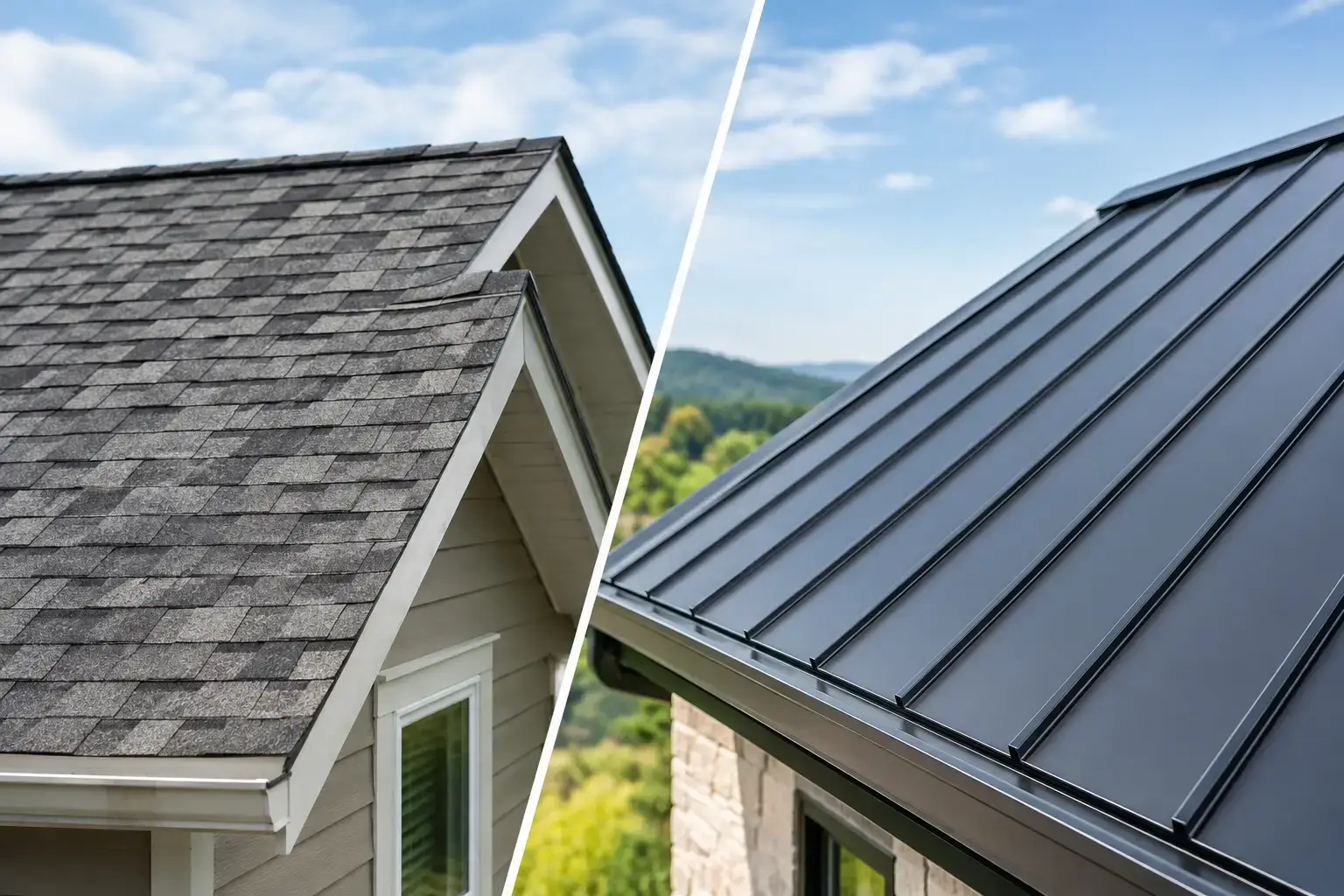
Your roof is the first line of defense against water intrusion. Shingles that are cracked, curled at the edges, loose, or missing altogether can leave the roof deck exposed. You may also notice dark areas, granules collecting in gutters, or sections of the roof that look uneven from the ground.
Not every worn shingle means the entire roof needs replacement. The right solution depends on the age of the roof, the extent of the damage, and whether the underlying decking has been affected. A professional inspection can distinguish a targeted repair from a system-wide issue.
2. Water stains beneath eaves or roof overhangs
Look up at soffits, fascia boards, and the underside of roof overhangs. Yellow-brown stains, peeling paint, soft wood, or dark streaks can point to water moving past damaged roofing, failed flashing, or overflowing gutters.
Fascia damage is especially common when gutters pull away from the home or stay clogged. Water can repeatedly run behind the gutter instead of into it, soaking the board that supports the entire system.
3. Gutters that overflow, sag, or separate from the house
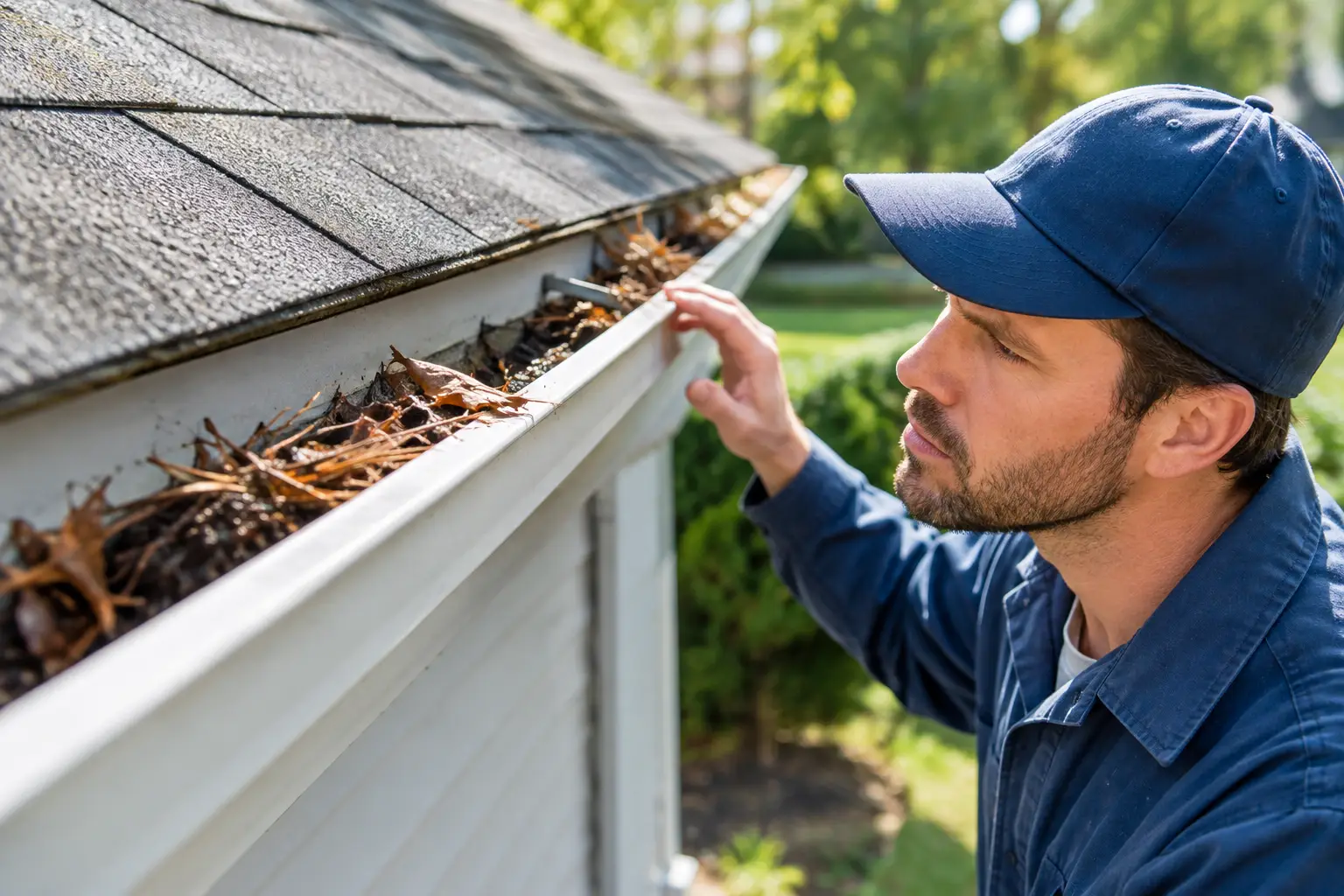
Gutters are designed to move roof runoff away from the property. When they are blocked with leaves, bent, improperly pitched, or too small for the roof area, water spills over the sides. That runoff can stain siding, rot trim, damage landscaping, and pool around the foundation.
A gutter that sags or separates from the fascia deserves prompt attention. The added weight of standing water and debris can damage both the gutter system and the wood behind it. Cleaning may solve the problem in some cases, but loose fasteners, failing fascia, or poor drainage may require repair or replacement.
4. Peeling paint, bubbling finishes, or swollen exterior trim
Paint is not just cosmetic. When paint bubbles, flakes, or peels in concentrated areas, moisture may be trapped beneath the surface. Window trim, door frames, porch columns, and wood siding are especially vulnerable because water can enter through failed caulk joints or unprotected end grain.
Probe suspicious wood carefully. If it feels soft, crumbly, or spongy, rot may already be present. Repainting over damp or deteriorated material will not stop the problem. The damaged area needs to be identified, repaired, properly sealed, and finished with materials suited to exterior exposure.
5. Warped, cracked, or loose siding
Siding should lie flat and secure against the exterior wall. Panels that warp, buckle, crack, or pull loose can allow rain to reach the sheathing and framing behind them. You may also see gaps around corners, utility penetrations, windows, or doors.
Vinyl, fiber cement, wood, and composite siding each fail differently, so the repair approach depends on the material. The concern is not only the visible panel. Water that enters behind siding can remain hidden for a long time, creating conditions for wood rot and mold growth inside the wall assembly.
6. Dark streaks, green growth, or recurring mildew on exterior surfaces
Dark vertical streaks on siding, roofing, masonry, or concrete can signal repeated moisture exposure. Green algae, moss, and mildew also tend to grow where a surface stays wet, shaded, or poorly ventilated.
Sometimes the answer is straightforward maintenance, such as removing debris or improving gutter flow. But recurring growth in the same location often points to a drainage issue, leaking downspout, roof runoff pattern, or failed seal that should be corrected instead of repeatedly cleaned.
7. Cracked, crumbling, or spalling brick and masonry
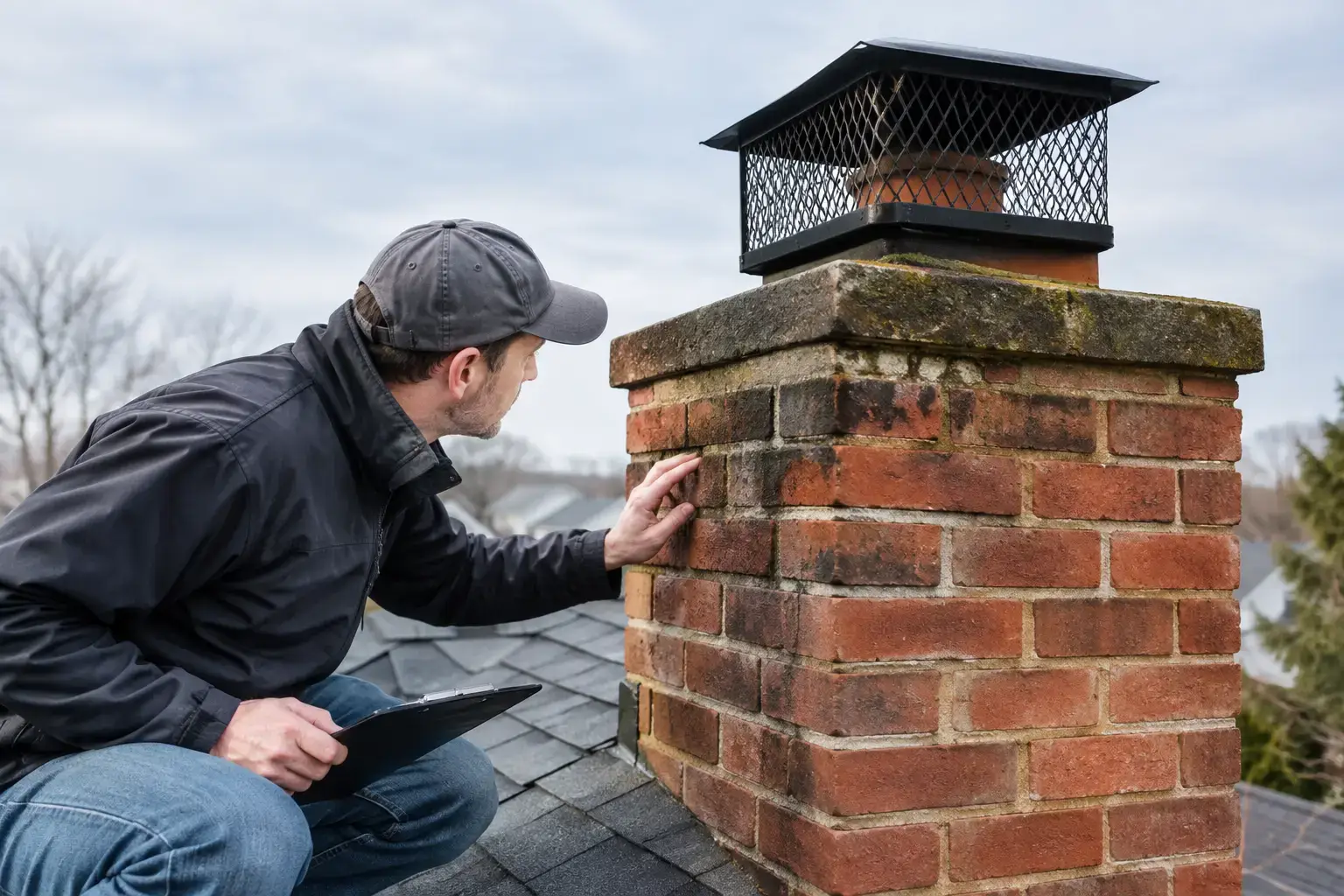
Brick, stone, stucco, and mortar can withstand harsh weather, but they are not maintenance-free. Cracks, missing mortar, white chalky deposits called efflorescence, and pieces of brick that flake away are warning signs that moisture is entering or moving through the masonry.
Freeze-thaw conditions make this more serious. Water enters small openings, freezes, expands, and gradually breaks down the surface. Chimneys are particularly exposed because they sit above the roofline and rely on sound flashing, mortar joints, caps, and crowns to shed water.
8. Cracks or gaps around windows and doors
Windows and doors are common entry points for exterior water. Look for failing caulk, separated trim, warped frames, staining below a window, or gaps where siding meets the opening. A draft may be noticeable, but water can enter even when the window itself still operates normally.
The fix could be resealing and flashing the opening, repairing surrounding trim, or addressing a broader siding issue. The goal is to create a continuous weather barrier that directs water outward rather than allowing it behind the wall.
9. Pooled water near the foundation
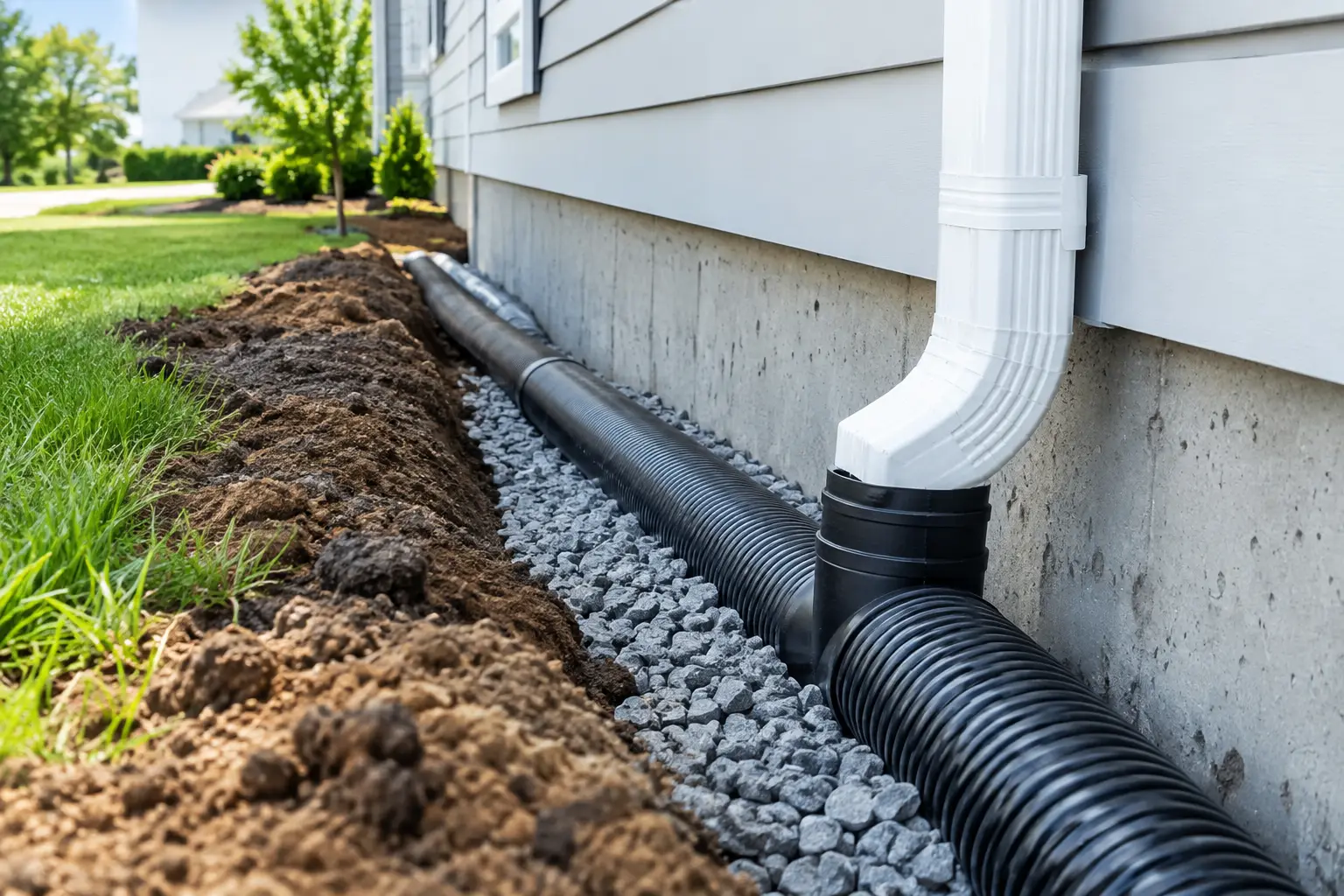
After rain, walk around the property and check where water settles. Puddles near the foundation, soil that slopes toward the building, and downspouts that discharge too close to the wall all increase the chance of water pressure against the foundation.
A little surface moisture is normal after a storm. Standing water that remains for hours or returns after every rainfall is not. It can contribute to foundation cracks, basement dampness, deteriorating masonry, and damage to exterior steps or walkways.
10. Foundation cracks, damp patches, or white mineral deposits
Not all foundation cracks are structural, but they should not be ignored. Hairline cracks, damp areas on exterior foundation walls, peeling coatings, and white mineral residue can show that water is finding a path through the concrete or masonry.
The right repair depends on the crack pattern, drainage conditions, and whether water is entering indoors. Foundation waterproofing may involve exterior excavation and drainage improvements, interior measures, crack repair, or a combination of solutions. A careful assessment prevents spending money on a temporary fix that does not address the source.
11. Damaged flashing around chimneys, skylights, and wall intersections
Flashing is the metal material that directs water away from vulnerable roof transitions. It is installed around chimneys, skylights, vents, dormers, valleys, and where roofing meets a vertical wall. When flashing rusts, lifts, cracks, or separates from surrounding materials, leaks can develop even if the shingles appear sound.
These areas are easy to overlook from the ground, yet they account for many roof leaks. Chimney flashing and skylight flashing should be inspected after severe storms and whenever a roof repair is being considered.
12. Soft, uneven, or deteriorating decks and exterior steps
Water damage does not stop at the building envelope. Wooden decks, porch boards, railings, and exterior steps can deteriorate when water is trapped against the structure or drainage is poor. Soft spots, loose railings, cracked boards, rusted connectors, and shifting masonry steps create safety concerns as well as repair needs.
For decks, the area where the deck connects to the home is especially important. Improper flashing at this connection can send water into the wall behind the deck, where damage may remain concealed until it becomes extensive.
When Exterior Water Damage Needs Professional Attention
Property owners can safely handle simple maintenance such as clearing visible gutter debris, extending a downspout, or monitoring a small area after rain. However, it is time to call a licensed exterior contractor when you see recurring leaks, roof damage, soft wood, masonry deterioration, foundation moisture, or water staining that keeps returning after a repair.
Urgent attention is also warranted after a storm has removed shingles, caused a tree impact, opened a hole in siding or roofing, or created active water entry. Temporary protection can limit further damage, but permanent repairs should address the full system – not just the visible opening.
A thorough inspection should identify where water begins, the path it follows, and which materials have been affected. That matters because the wet spot inside or outside a building is not always the true source. Water can travel along roof decking, framing, siding layers, or masonry joints before becoming visible.
Protect the Property Before Damage Spreads
The most effective approach is preventative: inspect the exterior seasonally, clean and maintain gutters, keep drainage moving away from the foundation, and address small defects before the next major storm. For older homes and commercial properties, scheduling an inspection can provide clarity before a minor concern turns into an expensive surprise.
American Supreme Construction helps property owners throughout New Jersey and the Tri-State area evaluate roofing, siding, gutters, chimneys, masonry, decks, steps, and foundation waterproofing concerns with clear recommendations and dependable workmanship. If you notice water where it should not be, a timely professional assessment can protect the structure, preserve its value, and give you confidence before the next rainfall.